
If Your Pad Comes Out Half-Dry But Your Trousers Are Still Wet, Read This.
It isn't your recovery, and it isn't how much you leak. It's a two-second gap that opens every time you stand up, and no pad on the pharmacy shelf can close it.

The moment every man knows after surgery: standing up from the table.
You know the moment.
Dinner's over. Someone tells a story, everyone laughs, and you start to stand. Before you do, you press your knees together. You put a hand on the table. You glance down at the front of your chinos, quickly, so nobody sees you do it.
Maybe nothing happens. Maybe it's a few drops. Maybe it's more. You won't know until you get to the bathroom and check.
It's been months since the surgery. Your surgeon said the operation went well, and it did. He also said the leaking can take time to settle, so you've been patient. You've done everything they told you.
You've done the pelvic floor exercises at red lights. You cut back on coffee. You stopped having a beer with the game. You tried the guards from the pharmacy, then the ones that say "for men" on the box, then the thicker ones. You keep spares in the glovebox, in your jacket and in the golf bag. You know where every toilet is between your house and the shops.
And you still find the wet patch.
Here's the part that doesn't add up, and you've probably noticed it yourself. You go to change, and the pad comes out half dry. Barely used. Yet your underwear is damp at the side, there's a mark on the inside of your thigh, and sometimes there's one on the front of your trousers.
If the pad wasn't full, where did it all go?
Most men decide the answer is them. Their body. Their recovery. "I just leak too much." So they buy a bigger pad, and the same thing happens again.
It isn't you. It's the gap.
The two-second gap
After prostate surgery, most leaks don't come while you're sitting still. They come when you move: standing up from a chair, climbing out of the car, a cough, a sneeze, lifting the shopping, bending to tie a shoe. Pressure lands on the bladder for a second or two, and that's when it escapes.
Now think about where your pad is in those two seconds.
A pad is a separate piece stuck to the inside of your underwear. And your underwear is loose. When you stand, your body goes up while the fabric drops and slides, and the pad goes with the fabric, not with you. For a second or two, a gap opens between you and the pad.
That is exactly the moment the leak arrives.
So it doesn't land in the pad. It runs along your skin, around the edge, down the inside of your leg or straight to the front. The pad stays half dry. Your trousers don't.
A pad, as you stand up
The pad moves with the loose fabric, not with you. For a second, a gap opens and the leak runs straight past it.
BRIV Leak-Proof, as you stand up
The protection is part of underwear held at the waist and around both legs. It moves with you, so there's no gap to get past.
Why a bigger pad makes it worse
Here's the trap. The number on the pad box tells you how much it can hold. It tells you nothing about where the pad is when you stand up.
A bucket that holds ten litres is no use if the drip lands beside it. Capacity was never your problem. Position was.
So when you move up to a thicker pad, you get more capacity in the same wrong place, plus a stiffer pad that bunches and shifts even more. More bulk, more crinkle, more outline under your trousers. Same wet patch.
The cheap "leak-proof" boxers you might have tried online often have the same flaw in a different form: a small absorbent patch at the front. A smaller bucket. The leak simply takes the side route.
What actually closes the gap
Once you see the gap, the fix is obvious. You don't need protection that holds more. You need protection that can't move away from you. That takes two things:
The protection has to be part of the underwear, not stuck to it. And the underwear has to be held to your body, at the waist and around both legs, so when you stand, sit, bend or climb out of the car, it moves with you. No fabric dropping away. No gap opening.
It has to sit where leaks actually travel. Not a patch in the middle. The front, underneath, the inner legs and the back, because that's the route a leak takes when you're moving.
Get both right, and capacity starts to matter again, because now every drop actually lands where it's meant to.
That's how BRIV Leak-Proof is built.
BRIV makes bamboo underwear for men. BRIV Leak-Proof takes the boxer brief you already know how to wear and builds the protection into it. We call it the zero-gap build:
Held at three points. A flat, no-roll waistband and two snug leg openings keep the protection against you through every movement. When you stand, it stands with you.
Protection along the leak routes. Front, underneath, inner legs and back. There's no patch to get around and no edge sitting in the middle.
9 layers pressed flat into the fabric. The top layers pull moisture away from your skin in seconds, the core locks up to 300 ml away for up to 12 hours, and a breathable barrier stops anything reaching your trousers.
Soft bamboo on the outside. It breathes, stays cool and stops odour building, so it feels like a good pair of boxer briefs, not plastic.
A pad or front patch covers this
BRIV Leak-Proof covers this
What the first week feels like
The first morning, you put them on like any pair of boxer briefs. That's the whole routine. No pad to line up, nothing to peel.
The first time you stand up from a table, you'll still press your knees together. Habit. Then you'll notice there's nothing to check.
Somewhere in that first week you'll wear the light chinos. You'll play the back nine. You'll drive two hours without planning a stop. And at some point you'll realise you haven't thought about it all afternoon.
That's the gap closing.

Light chinos. The back nine. No spare in the bag.
Side by side
| Pads and guards | Cheap "leak-proof" boxers | BRIV Leak-Proof | |
|---|---|---|---|
| Stays against you when you stand | No. It moves with the loose fabric | Partly | Yes. Held at the waist and both legs |
| Covers the routes leaks take | One spot in the middle | Often front only | Front, underneath, inner legs and back |
| Edges a leak can get around | All four | Around the patch | None in the protection zone |
| Can anyone tell? | Crinkle and outline | Sometimes bulky | Looks like normal boxer briefs |
| What it costs over time | A new pack every week | Replaced when it wears out | Wash and wear again |
An honest note: BRIV Leak-Proof is made for light and moderate leaks, up to 300 ml in one go. If you regularly leak more than that, or you rely on adult briefs every day, it isn't the right fit, and we'd rather tell you now.
Worn by 32,554+ men · ★★★★★4.9 from 32,544 verified buyers
Start with four pairs
Four pairs is the rotation: one on, one in the wash, one drying and one spare. That's why we point men coming off pads to Buy 2, Get 2 Free.
And think about what the pad habit costs: a new pack every week, for as long as the leaking lasts. Four pairs you wash and wear again is a one-off.
Four pairs bought separately: $159.80
$19.98 a pair · Single pair $39.95
Ships with 4 free gifts in a plain, unbranded box:
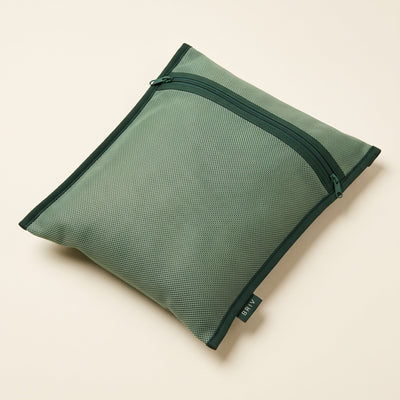
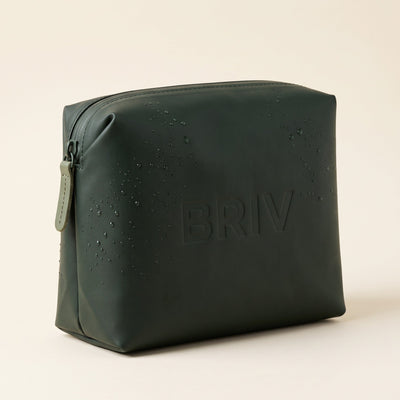
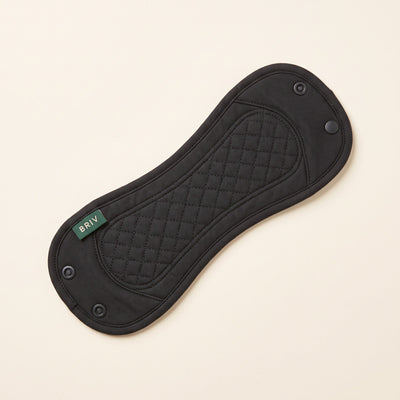
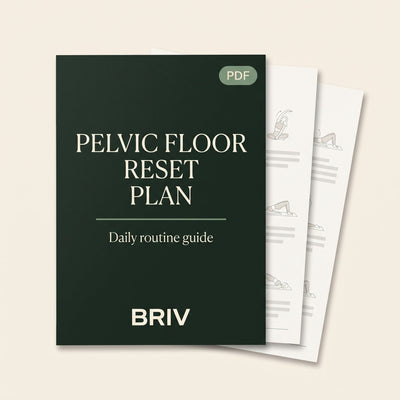
Wear them for 60 days. Stand up, sit down, cough, drive, play eighteen. If they don't close the gap for you, email us and you get every cent back. You keep the four gifts either way.
Your surgeon fixed what needed fixing. The rest of the healing is your body's job, and it takes the time it takes. But the wet patch while you wait? That was never about you. It was the gap. And a gap is a design problem, which means it has a design answer.
Get 2 + 2 Free — $79.90Buy 2, Get 2 Free · 4 free gifts · 60-day money-backP.S. Next time you change, look at the pad. If it's half dry and your underwear isn't, you've just seen the gap for yourself.